Gemini 3.8 Live Specs: Bidirectional Audio and Avatars
Google launched Gemini 3.8 Live with Live Avatar, bringing real-time voice, video streaming, and asynchronous tool execution to enterprise workflows.
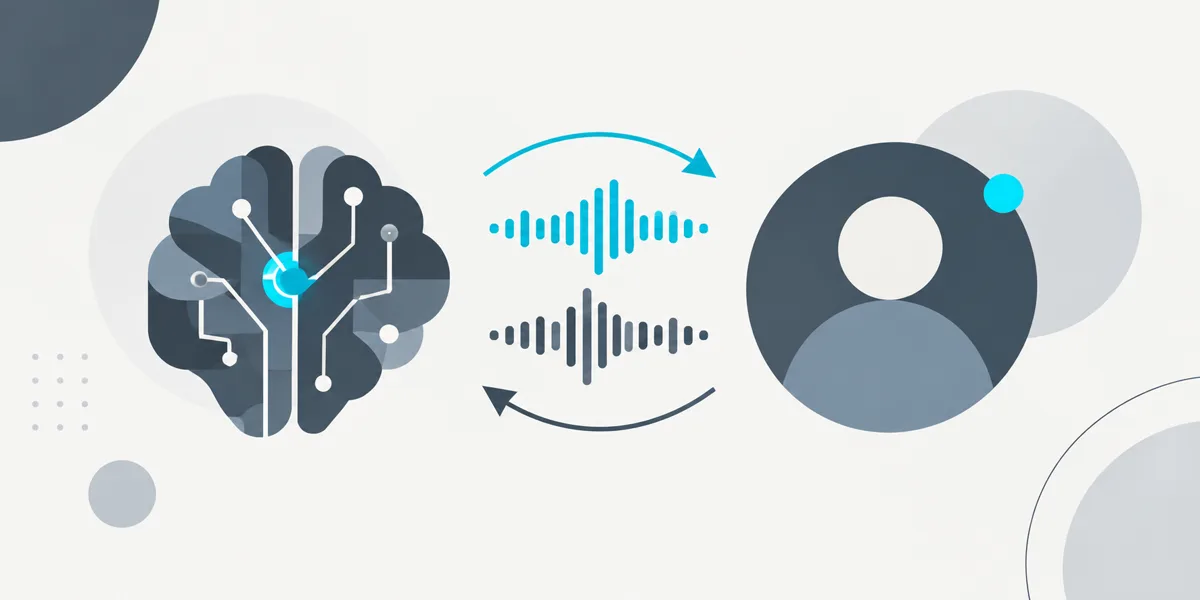
Google DeepMind released Gemini 3.8 Live and Gemini 3.8 Live Extended Thinking on September 15, 2026, followed by Gemini 3.8 Live with Live Avatar on September 24, 2026. The new releases target engineering teams and enterprise developers building real-time interactive agents that require continuous voice streaming, visual context processing, and concurrent background execution. According to Google DeepMind's official announcement, the release pairs native dialogue models with real-time video generation and synchronized lip-movement across 97 languages.
These models enter production alongside complementary text-to-speech tools and fast reasoning engines, expanding the Gemini 3.8 generation ecosystem across the Gemini API, Google Workspace, and Gemini Enterprise.
What was announced
The Gemini 3.8 conversational stack consists of several dedicated model variants and platform updates deployed throughout September 2026:
- Gemini 3.8 Live: Announced by Principal Engineer Tom Ouyang and Malini Jaganathan on behalf of the Gemini Audio Team, this model is built for operational scale and cost efficiency. It combines conversational dialogue, real-time visual grounding, and low-latency interaction. It is available through the Gemini API, Google Workspace, Search, and the Gemini mobile app.
- Gemini 3.8 Live Extended Thinking: Deployed concurrently with 3.8 Live, this variant targets high-complexity tasks requiring multi-step reasoning. It introduces configurable reasoning effort levels and allows users to supply active document context during live spoken sessions without interrupting conversational flow. We previously analyzed the initial rollout in Gemini 3.8 Live Launched: Real-Time Voice and Reasoning.
- Gemini 3.8 Live with Live Avatar: Announced on September 24, 2026, by Research Scientist Shuo-yiin Chang and Software Engineer CJ Zheng, this release integrates real-time video synthesis directly with live speech-to-speech models. It features synchronized lip movements, natural facial expressions, and dynamic persona rendering. The model is available in Gemini Enterprise.
- Gemini 3.8 Flash TTS and Flash-Lite TTS: Announced on September 23, 2026, by Group Product Manager Leland Rechis and Alan Cowen, these audio generation models provide line-by-line direction of pacing, acting cues, and conversational audio artifacts. They support voice design via natural language prompts, replication from 30-second audio samples, and an existing library of over 2,000 voices across Google AI Studio, the Gemini API, Gemini Enterprise, Gemini Notebook, and Google Vids.
These releases follow the September 2, 2026 debut of Gemini 3.8 Flash and Gemini 3.8 Flash Cyber, priced at $0.75 per million input tokens and $3.75 per million output tokens, as covered in Gemini 3.8 Flash: Specs, Benchmarks, and Agentic Upgrades.
| Model / Feature Variant | Primary Engineering Focus | Target Deployment Environment | Key Functional Capabilities |
|---|---|---|---|
| Gemini 3.8 Live | Cost-efficient conversational throughput | Gemini API, Google Workspace, Gemini App, Search | Fast turn-taking, visual grounding, interruption handling |
| Gemini 3.8 Live Extended Thinking | Multi-step reasoning during active voice sessions | Gemini API, Google Workspace, Gemini App | Configurable reasoning levels, document context injection |
| Gemini 3.8 Live with Live Avatar | Streaming visual persona generation | Gemini Enterprise | Lip-syncing across 97 languages, visual drift prevention |
| Gemini 3.8 Flash TTS | Granular artistic audio direction | Google AI Studio, Gemini API, Gemini Enterprise | Line-by-line acting controls, custom voice replication |
| Gemini 3.8 Flash-Lite TTS | High-throughput, low-cost speech synthesis | Google AI Studio, Gemini API, Gemini Enterprise | Scaled dubbing, operational voice agents |
Technical Mechanisms of Bidirectional Streaming and Live Avatars
Standard speech interfaces have historically relied on a cascaded architecture: an automatic speech recognition (ASR) system transcribes user audio to text, a large language model generates a textual completion, and a text-to-speech (TTS) engine synthesizes audio output. Cascaded pipelines introduce additive serialization latency at every boundary. They also discard non-verbal acoustic signals, such as pitch, cadence, and emotional tone.
Native speech-to-speech architectures process audio tokens directly within the core neural network. As independent developer Simon Willison documented when building an interface for the release, Gemini 3.8 Live exposes a bidirectional WebSocket endpoint:
wss://generativelanguage.googleapis.com/ws/google.ai.generativelanguage.v1alpha.GenerativeService.BidiGenerateContent
Using standard browser APIs like the Web Audio API AudioContext, client applications stream raw pulse-code modulation (PCM) audio chunks to the server over a single persistent full-duplex TCP socket. The server continuously processes incoming audio frames while returning streamed audio buffers.
+-------------+                     +----------------------------------------+
| Client Host |                     | Google Generative Language Service     |
+-------------+                     +----------------------------------------+
       |                                                |
       |  WebSocket Handshake (BidiGenerateContent)    |
       |===============================================>|
       |                                                |
       |  Stream Audio PCM Frames (AudioContext)        |
       |----------------------------------------------->|
       |                                                |--+ Native Multimodal
       |  Bidirectional Audio Response Buffers          |  | Dialogue Engine
       |<-----------------------------------------------|<-+
       |                                                |
       |  [User Interrupts / Sends Voice Frame]         |--+
       |----------------------------------------------->|  | In-flight Output
       |                                                |  | Buffer Cancellation
       |  Flushed Output / Dynamic Turn-Taking          |<-+
       |<-----------------------------------------------|
       |                                                |--+ Asynchronous Tool
       |  Simultaneous Background Tool Trigger          |  | Execution
       |  (Dialogue and Video Avatar Retain Presence)   |  | (No I/O Blocking)
       |                                                |<-+
This bidirectional streaming protocol enables several distinct execution patterns:
Interruption and Dynamic Turn-Taking
In half-duplex text generation, a model must complete generating an output sequence before processing additional input. With bidirectional streaming, the ingestion loop runs concurrently with audio generation. When user speech energy crosses an acoustic detection threshold, the server cancels downstream token generation and flushes in-flight output buffers. This allows natural conversational barge-in without manual state clearing on the client.
Asynchronous Tool Calling with Continuous Presence
Traditional tool execution forces an agent into a blocking wait state: the model halts output generation while an external API call or database query executes over network I/O.
According to Google DeepMind's announcement, Gemini 3.8 Live with Live Avatar uses asynchronous tool calling. The model can trigger external tool executions in the background—such as looking up hotel reservation databases—while the primary model process continues generating dialogue and animating the visual avatar. The conversation does not stall while waiting for network I/O to complete. Once background data returns, the model incorporates the retrieved state into its ongoing context window.
Streaming Multimodal Synthesis Across Languages
Video avatar pipelines frequently suffer from visual drift—where accumulated prediction errors across consecutive video frames cause facial geometry to distort over long sessions. DeepMind reports that Live Avatar binds native live dialogue with low-latency streaming video, adapting lip-syncing and facial expressions dynamically across 97 languages without visual drift or degradation in video fidelity.
The TTS layer provides complementary granular control. Simon Willison's tests of the gemini-3.8-flash-tts API showed it took approximately 20 seconds to generate 1 minute and 18 seconds of multi-character dialogue at an API cost of 2.74 cents. Developers can supply natural language acting cues, dialect instructions, and backchanneling cues directly within generation requests.
Organizational Strategy and Competitive Context
The launch of the Gemini 3.8 Live series occurs amid strategic changes at Google DeepMind. As reported by The Verge, Koray Kavukcuoglu stepped into the leadership of the Google DeepMind division after Demis Hassabis stepped down in August 2026.
Google had not shipped a flagship frontier model since the Gemini 3 series in November 2025. During that window, competitors advanced with systems such as OpenAI's GPT-6 line (analyzed in GPT-6 Astra Architecture, Pricing, and Benchmark Specs) and Anthropic's Mythos models.
Although Google CEO Sundar Pichai announced at Google I/O in May 2026 that Gemini 3.5 Pro would arrive in June, the model was never released. Kavukcuoglu confirmed that DeepMind paused the rollout of Gemini 3.5 Pro to prioritize fast, cost-efficient Flash variants. The engineering team delivered Gemini 3.6 Flash, Gemini 3.7 Flash, and Gemini 3.8 Flash in rapid succession across the summer of 2026.
DeepMind is currently refining Gemini 4, with Kavukcuoglu stating that Google aims to release an early post-training checkpoint well before the end of 2026. In the interim, Google's operational focus centers on deploying low-latency live audio and video models like Gemini 3.8 Live into enterprise products.
What we do not know yet
While Google DeepMind has highlighted the end-user capabilities of Gemini 3.8 Live and Live Avatar, several critical technical and commercial metrics remain undisclosed:
- Token and Streaming Pricing: DeepMind published official pricing for Gemini 3.8 Flash ($0.75 per million input tokens, $3.75 per million output tokens), but has not disclosed the pricing structure for Gemini 3.8 Live, Gemini 3.8 Live Extended Thinking, or Live Avatar. Whether Live Avatar is billed per minute of rendered video, per session, or via standard Gemini Enterprise seat licensing is unconfirmed.
- Latency Benchmarks: The documentation describes "near real-time" interaction and "low-latency streaming video," but DeepMind provided no quantitative latency benchmarks. Time-to-first-token (TTFT), round-trip audio latency (mouth-to-ear in milliseconds), and phoneme-to-viseme video rendering latency have not been published.
- Underlying Model Parameters: The parameter scale of the 3.8 Live models, the size of their active mixture-of-experts subnetworks, and the architecture of the video rendering model remain undisclosed.
- Video Streaming Specifications: Technical details regarding video frame rate (FPS), output stream resolution, encoding formats (such as WebRTC vs chunked WebSocket binary transfers), and client bandwidth requirements have not been released.
- Context Window Boundaries: DeepMind confirmed that Gemini 3.8 Live Extended Thinking accepts document context during voice sessions, but the maximum context window capacity in tokens for the live audio models has not been disclosed.
Conclusion
The release of Gemini 3.8 Live, Live Extended Thinking, and Live Avatar reflects an architectural focus on full-duplex multimodal interaction. By combining bidirectional WebSockets, native audio processing, asynchronous tool execution, and video generation across 97 languages, DeepMind is attempting to eliminate the friction points common to cascaded voice agents. Engineering teams evaluating the platform must now balance these rich interface features against the absence of public latency metrics and commercial usage pricing.
Sources
- Google DeepMind: Introducing Gemini 3.8 Live with Live Avatar
https://deepmind.google/blog/introducing-gemini-38-live-with-live-avatar/ - Google DeepMind: Introducing Gemini 3.8 Live and 3.8 Live Extended Thinking
https://deepmind.google/blog/introducing-gemini-3-8-live-and-3-8-live-extended-thinking/ - Google DeepMind: Gemini 3.8 text-to-speech says hello
https://deepmind.google/blog/say-hello-to-gemini-38-text-to-speech/ - Google DeepMind: Introducing Gemini 3.8 Flash and 3.8 Flash Cyber
https://deepmind.google/blog/introducing-gemini-3-8-flash-and-38-flash-cyber/ - Google DeepMind: Introducing Gemini 3.7 Flash
https://deepmind.google/blog/introducing-gemini-3-7-flash/ - Simon Willison: Gemini Live audio
https://simonwillison.net/2026/Sep/15/gemini-live/ - Simon Willison: Gemini 3.8 TTS Playground
https://simonwillison.net/2026/Sep/23/gemini-tts-playground/ - The Verge: Gemini 4 is almost ready, says new Google DeepMind chief
https://www.theverge.com/tech/999802/google-deepmind-gemini-4-timeline-koray-kavukcuoglu